
Skip to content

Pittsburgh Theological Seminary

Grounded in Faith, Formed in Community

Menu
  • Home
  • Contact Us
Menu

Inside the PTS Curriculum: Christian Political Resistance

Posted on February 19, 2021February 12, 2021 by ptsblog
Print Friendly, PDF & Email

The “Inside the PTS Curriculum” series gives you an inside look at what students are learning in their courses at Pittsburgh Theological Seminary. Each article focuses on one class, its subject matter, what students can expect to learn, the required texts, and the kinds of assignments students can expect. We’ll let you know whether the course is required or available for the Master of Divinity (MDiv), the Master of Arts in Pastoral Studies (MAPS), or Master of Theological Studies (MTS). Each article will include the professors’ bio.

This week’s course is: “Christian Political Resistance.”


About Christian Political Resistance

During this term, Pittsburgh Theological Seminary students will be learning about Christian political resistance with the Rev. Dr. John Burgess. This course is available for students in the Master of Divinity (MDiv) degree, Master of Arts in Pastoral Studies (MAPS) degree program, and open to students in the Master of Theology (MTS) degree program.

This course will entail a study of different forms of Christian resistance to unjust political orders, focusing on ordinary virtues of truth-telling, caring, and dignity. Attention will be given to biblical perspectives on justice and on resistance to oppressive state regimes. Students will explore historical examples of Christian political resistance and engage in theological reflection on different forms of resistance and how they express or violate the gospel. They will study philosophical and ethical analysis of the grounds for, and effectiveness of, different forms of political resistance.

By the end of the course, students will be able to examine and explain three primary aspects of Christian political resistance. First, the way in which “ordinary” Christian virtues (especially of truth-telling, caring, and dignity) are grounded in Scripture and particular theological traditions. Next, how these virtues have served in specific historical contexts as forms of resistance to oppressive political regimes (e.g., Nazi Germany¸ the Soviet Union, and Jim Crow America). Finally, possibilities for exercising these virtues in political resistance to structural social injustices in contemporary America.

In addition to classroom participation, assignments include reading responses and a final paper. Required reading includes Wallace Daniel, Women of the Catacombs: Memoirs of the Underground Orthodox Church in Stalin’s Russia; Philip Hallie, Lest Innocent Blood Be Shed; and Colson Whitehead, The Nickle Boys; and John Howard Yoder, The Politics of Jesus.


About the Instructor

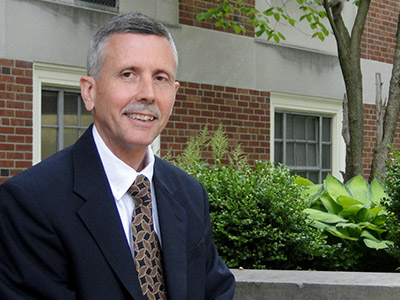
The Rev. Dr. John P. Burgess has taught at Pittsburgh Theological Seminary since 1998. He holds an M.Div. from McCormick Theological Seminary and a Ph.D. in Christian theology from the University of Chicago. An ordained Presbyterian minister and the author of numerous books, Burgess’s professional memberships include the American Academy of Religion, the Society of Christian Ethics, and the American Theological Society. He was a Fulbright Scholar to Russia in 2011 and again in 2018-2019, a Luce Fellow in Theology for 2011-2012, and a research fellow at the Center of Theological Inquiry in 2014-2015. These awards have supported his current research on the Russian Orthodox Church in post-communist Russia. Burgess is married and has three grown daughters, who are also his theological teachers.

Share this:

  • Share on Facebook (Opens in new window) Facebook
  • Email a link to a friend (Opens in new window) Email
  • Share on X (Opens in new window) X

Leave a Reply Cancel reply

Your email address will not be published. Required fields are marked *

Founded in 1794, Pittsburgh Theological Seminary is a graduate theological school of the Presbyterian Church (U.S.A.), offering master's and doctor of ministry degrees as well as certificate programs. Participating in God's ongoing mission in the world, Pittsburgh Seminary is a community of Christ joining in the Spirit's work of forming and equipping people for ministries familiar and yet to unfold and communities present and yet to be gathered.

Recent Posts

  • The Challenges of Being a Neighbor
  • Who Is My Neighbor? Edith Thorpe on Practicing Fred Rogers’ Philosophy in a Modern World
  • Few, Many: Success and Failure in Ministry
  • Centering People: PTS 2030
  • All God’s Children—Disability Inclusion in the Church

Categories

  • Book Recommendations
  • Church Planting
  • Counseling
  • Inside the PTS Curriculum
  • Ministry
  • People of PTS
  • Protestant Spirituality
  • Seminary and Programs
  • Sermon Writing Tips
  • Social Work
  • Theological Reflection
  • Uncategorized
  • Who Is My Neighbor?

Archives

Tags

Bible study Call to ministry chaplaincy Christian mission Christian spirituality church planting church planting for new communities church planting in pennsylvania community Community worship DMin doctor of ministry education faith and politics fasting Festivals and holy days Fred Rogers Lent master of divinity mdiv alumni mdiv program MDiv program Pittsburgh ministry Mission reflections mission trip Mister Rogers' Neighborhood pastoral care pastoral counseling Pastoral vocation PCUSA preaching Seminary community seminary experience Seminary experiences sermon writing tips Social justice Spiritual journeys theological education theology and social work Urban ministry Volunteering Women in ministry world mission World Mission Initiative Youth ministry

Top Posts and Pages

  • The Challenges of Being a Neighbor
    The Challenges of Being a Neighbor
  • Learning at the US/Mexico Border
    Learning at the US/Mexico Border
  • Five Things St. Patrick Can Teach Church Planters
    Five Things St. Patrick Can Teach Church Planters
  • The Master of Divinity Will Challenge You
    The Master of Divinity Will Challenge You
  • Another Saint, Another Seed: Father Oscar Romero
    Another Saint, Another Seed: Father Oscar Romero
  • Planning a Sabbatical
    Planning a Sabbatical
  • The One Sin We Forgot to Confess This Lent
    The One Sin We Forgot to Confess This Lent
  • What Happens After We Die?
    What Happens After We Die?
  • Listening and Learning to Follow God's Call
    Listening and Learning to Follow God's Call
  • How can I do Christian mission work faithfully?
    How can I do Christian mission work faithfully?

Subscribe to Blog via E-mail

Enter your e-mail address to subscribe to this blog and receive notifications of new posts by e-mail.

© 2026 Pittsburgh Theological Seminary | Powered by Superbs Personal Blog theme