
Many people know that 2026 marks the 250th anniversary of the United States of America, but this year we also celebrate the anniversary of Robert’s Rules of Order (RONR). For 250 years, communities, organizations, churches, and civic groups have embraced a simple but important idea: good decision making depends on good process. This anniversary offers an opportunity to reflect on the enduring influence of Robert’s Rules of Order and how it has helped shape communities, meetings, and lives. In celebration of Robert’s 250th anniversary, let’s debunk some myths surrounding parliamentary procedure.
Myth 1: Parliamentary procedure doesn’t matter
 Most organizations, including churches and non-profit organizations, have bylaws which dictate a specific parliamentary authority or decision-making framework. According to the National Association of Parliamentarians, the most used parliamentary authority is Robert’s Rules of Order. Parliamentary procedure allows groups to make decisions fairly by giving voice to all members and protecting the rights of those in the minority. It also allows bodies to establish and empower effective leadership. Robert’s Rules of Order in particular allows groups to make decisions in a fair, efficient, and respectful manner.
For more information on Principles Underlying Parliamentary Law, please review RONR: XLIX.
Myth 2: It is always necessary to have a second
The use of the second is a very important part of the life cycle of a motion. It is used to signal to the group that more than one individual is interested in discussing and disposing of the motion. The individual making the second does not need to be in favor of the motion, they need to be in favor of spending time on the motion. However, there are several cases where seconds are not needed, including if the motion is coming from a committee or if the group has fewer than 12 members.
For more information on seconds, please review RONR 4:9-14; t44-t45.
Myth 3: It is appropriate to yell, “Question!” to stop debate on a motion.
 Many individuals who have attended meetings, especially a Presbytery meeting, can remember a time when discussion was dragging on and someone yelled from their seat, “question!” What the individual was attempting to do was immediately move to close debate on a motion. However, this practice is not the correct motion or respectful to those present for the meeting. The appropriate motion would be to move the previous question. It is important to note, that individuals must obtain the floor and seek recognition from the chair/moderator to make this motion. The only reason that a member may interrupt or yell from their seat is in raising a Point of Order about parliamentary procedure.
For more information regarding the Previous Question, please review RONR 16.
Myth 4: Tradition and culture do not matter when using Roberts Rules of Order.
Robert’s Rules of Order does allow for flexibility when incorporating the cultures and established traditions of a group. According to Robert’s, a custom is an unwritten practice that has been repeated over time. If the custom directly contradicts bylaws, established parliamentary procedure, or other authorities, a member may raise a Point of Order in which case the custom “falls to the ground” immediately. If there are no Points of Order, groups may incorporate customs into their deliberations as if they were prescribed by a rule. An example of this would be to say the Pledge of Allegiance at the beginning of all meetings.
For more information on customs, please see RONR 2:25.
Myth #5: To lay on the table and to postpone are synonymous
 When members make the motion to lay on the table, they generally mean to postpone. Generally, if a member attempts to push discussion or vote to another meeting, it is a motion to postpone to a certain time. Any attempts to kill a motion would be considered a motion to postpone indefinitely. The motion to lay on the table is only in order under certain circumstances, mainly setting aside a pending question temporarily to address something else of immediate urgency. The question on the table must be taken from the table during the same meeting session or the following session otherwise the question dies.
For more information on Laying on the Table, please review RONR 17.
Robert’s Rules of Order will forever be appreciated and loved by those who use it to guide their meetings. It has a beautiful way of working with the Holy Spirit to ensure a fair and in order discernment process. To learn more about Roberts Rules of Order, please consider picking up a copy of Roberts Rules of Order Newly Revised 12th Edition. The world needs more parliamentarians, and if you are interested in becoming a parliamentarian, consider visiting the National Association of Parliamentarians website and join your local Parliamentary Law Unit.
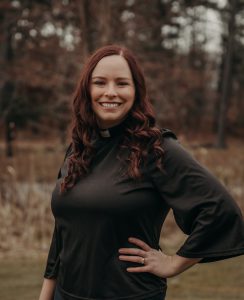 The Rev. Annamarie Groenenboom ’17 is the associate stated clerk of the Presbytery of Lake Michigan. She is a Minister of Word and Sacrament in the PC(USA) and a member of the National Association of Parliamentarians. She enjoys spending time with her family, volunteering with the General Assembly, and playing Dungeons & Dragons. She is a graduate of the M.Div. and M.S.W. joint degree program through Pittsburgh Theological Seminary and the University of Pittsburgh.
Read Next