
Above: Painting by Alex Levin: “Welcoming Messiah” https://artlevin.com/
He left that place and came to his hometown, and his disciples followed him. On the Sabbath he began to teach in the synagogue, and many who heard him were astounded. They said, “Where did this man get all this? What is this wisdom that has been given to him? What deeds of power are being done by his hands! Is not this the carpenter, the son of Mary and brother of James and Joses and Judas and Simon, and are not his sisters here with us?” And they took offense at him. Then Jesus said to them, “Prophets are not without honor, except in their hometown and among their own kin and in their own house.” And he could do no deed of power there, except that he laid his hands on a few sick people and cured them. And he was amazed at their unbelief.
Then he went about among the villages teaching. He called the twelve and began to send them out two by two and gave them authority over the unclean spirits. He ordered them to take nothing for their journey except a staff: no bread, no bag, no money in their belts, but to wear sandals and not to put on two tunics. He said to them, “Wherever you enter a house, stay there until you leave the place. If any place will not welcome you and they refuse to hear you, as you leave, shake off the dust that is on your feet as a testimony against them.” So they went out and proclaimed that all should repent. They cast out many demons and anointed with oil many who were sick and cured them.
-Mark 6:1-13 (NRSVUE)
Few, Many; Failure, Success
This passage might not seem immediately relevant to ordinary life on a quiet Wednesday.
But here’s something I noticed when I was reading the passage: there’s a summary at the end of each section of the reading. After Jesus’s visit to his hometown, Scripture says:
“And he could do no deed of power there, except that he laid his hands on a few sick people and cured them.”
But after the disciples’ mission, it reports:
“They cast out many demons, and anointed with oil many who were sick and cured them.”
Parallel descriptions of their ministries with one major difference: Jesus impacted few; the disciples, many. Here’s the Roger Owens version: “Jesus went back home, and his ministry there was a massive failure, but the disciples’ mission was a roaring success.”
Few. Many. Failure. Success. Those might be words we can relate to.
The Allure of Measurable Outcomes

When I was in graduate school, I served on a re-entry care team for Michael, a man who’d just gotten out of prison. Those who’ve been incarcerated face enormous obstacles when they get out. So as Michael’s care team, we hoped to get him reestablished, help him make it on his own. One woman in our group, Ann, began to feel like a mother to Michael. She started tutoring him. She shopped for him and baked for him; she visited him, she loved him. So when Michael stole a four-wheeler to buy drugs and got sent to a state prison too far away for us to visit, it hit Ann especially hard. At our next meeting, Ann wept. “We failed,” she cried. “We failed.” And by the numbers, she was right—our batting average was zero. What did we have to show for our work?
Few. Many. Failure. Success.
I started pastoring in 2005, and I’ve really struggled through the years to shake my obsession with statistics. At that first, small church, Clay sat in the back pew with a clipboard and counted those in attendance—65 was a good Sunday! Each Sunday, after everyone left, I’d sneak to the pew where he left the clipboard and check the numbers. Later, it was little green cards that the ushers would fill out that I’d check—and sometimes correct—on my way out every Sunday. Because, as they say: numbers don’t lie. And so we bow to phrases like “quantitative data,” “measurable outcomes,” “key performance indicators”—anything that can help us know if we’ve failed or succeeded.
A Deeper Measure of Success
In Mark chapter 6, if the disciples had been applying for a grant, they would have gotten one—the numbers showed their effectiveness. And Jesus would have been invited to apply again in the next round.
But look again at the passage, and we might see a more meaningful measure. Earlier in Mark’s Gospel, Jesus woke early one morning to pray. People were wondering where he was, so when the disciples found him, they said, “Everyone is looking for you, what’s up?” And he replied, “Let’s go into the neighboring towns, where I can proclaim the Kingdom of God, for that is what I came to do.” Then he shows up in his hometown, and teaches in the synagogue, for that is what he came to do. You see, he’s doing precisely what God sent him to do, regardless of how the message is received.
You see it, right? The deeper measure of success this gestures to? Success isn’t indicated by outcomes alone, but by our faithfulness to the work, the call.
Years after my participation on Michael’s re-entry care team, I started to ask: Did we really fail? Was that our one goal—keep him off drugs and out of prison? Then maybe. But we didn’t fail if our call was to be with him, love him, learn from him, see Jesus in him, become community with him. So much was out of our hands, but not that.
This passage invites those kinds of questions: Are we using the gifts we were given by God? Are we discerning God’s call on our lives and living it out—as individuals and with our communities? If so, then we can look at the “fews” and the “manys”, the so-called failures and the successes, and know that, while those things matter on one level, on a deeper level—at the God’s-call, life-direction, living-our-vocation-to-love level—such quantitative metrics don’t come close.
What Counts in God’s Kingdom
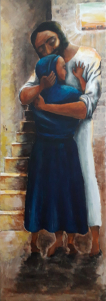
In her memoir Breathing Space, Heidi Neumark recounts her 20 years as a Lutheran pastor of a church in the Bronx. Early on, she met a woman named Ruby who had come to the food pantry, so Neumark went to visit her. She climbed the stairs to sixth floor of the apartment complex—the elevator didn’t work—and knocked on Ruby’s door. She could tell Ruby was inside, deciding whether to open the door. When she did, she apologized for the condition of the apartment, and invited Neumark in. The living room was windowless, dark—the electricity had been cut off, but Neumark could see the accumulated garbage in the room, and there was a small boy sitting on the floor in his underwear, picking soggy pieces of cereal out of a bowl. Ruby invited her to sit, and after a pause, as Neumark puts it, Ruby opened another door, and out spilled her story: depression, a battle with crack, an ex-husband’s abuse, her mother’s rejection. Rats chewing her kid’s mattress in the night. A recent HIV diagnosis. “You know what I want?” Ruby said, “I want my children to have a photo album of happy memories of their life with me to look at after I die . . . I want to start making some happy memories.” And any pastor would look around that room and listen to this story and start thinking of ways to help, ways to make this women’s life better, help her dream come true. And then, Ruby grabbed Neumark’s hands with her own strong trembling hands—and began to pray—a radiant prayer in a dingy room.
Neumark never saw any outcome from her visit. Couldn’t put that one in the “win” column. She writes, “I never saw Ruby again. A few weeks later, the apartment was empty, boarded up.”
Few; many. Success; failure.
What counts? What really matters? How do we know? Remember Jesus and the disciples preaching and embodying God’s kingdom. Think of Neumark and Ruby sharing with one another the love and mercy of Jesus. What counts? What really matters? I think we know.
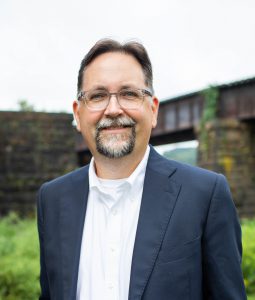
The Rev. Dr. L. Roger Owens is Hugh Thomson Kerr Professor of Pastoral Theology at Pittsburgh Theological Seminary. He is the author of numerous works on Christian spirituality, including Praying Their Way: 24 Prayer Practices for Kids and the Adults Who Love Them (Upper Room, 2026; co-authord with his daughter Mary Clare Owens), Everyday Contemplative: The Way of Prayerful Living (Upper Room Books, 2022), and The Shape of Participation: A Theology of Church Practices (Cascade Press, 2010), which was called “this decade’s best work in ecclesiology” by The Christian Century. Dr. Owens serves on the faculty of the Upper Room’s Academy for Spiritual Formation, where he lectures on the history and practice of Christian spirituality. Before coming to PTS, he served both urban and rural churches in North Carolina for eight years as co-pastor with his wife, the Rev. Ginger Thomas. He holds degrees from Anderson University (B.A., Bible/religion and philosophy), Duke Divinity School (M.Div.), and Duke University (Ph.D., theology), where he was awarded a Lilly Fellowship for the Formation of a Learned Clergy.
Read Next